It's Getting Twisted in Mrs. Rogers' Stamperhood!
When I say it's getting twisted in the Stamperhood, I don't mean THAT kind of twisted, I mean the Faux Twisted Ribbon Technique kind of twisted. For my August Technique Tuesday class, I'm featuring techniques that use up scraps, or at least small amounts of DSP. I certainly don't limit myself to scraps, although that is what got me started with that class. Anyway, I wanted to show the Faux Twisted Ribbon Technique tonight because I show a Double Faux Twisted Ribbon technique on Tuesday. The technique is much the same, but there are variations, even beyond tonight's and Tuesday's. I'll discuss that a bit in my video tonight.

Measurements
- Lemon Lolly cardbase (5-1/2" x 8-1/2", scored and folded in half at 4-1/4")
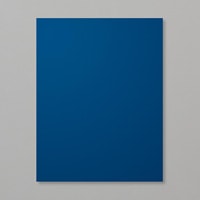
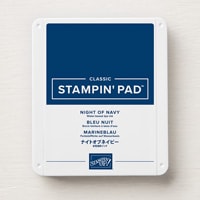
- Night of Navy cardstock (2-1/4" x 5-1/2")
- Basic White cardstock (2" x 5-1/2", scrap)
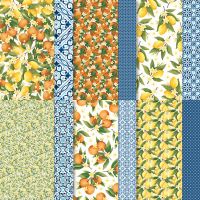
- Mediterranean Blooms DSP
- Pattern 1* (two 1/2" x 12" strips)
- Pattern 2* (two 1/2" x 12" strips)
- *Note: if using two patterns from opposite sides of the same sheet, you'll only need three 1/2" x 12" strips
Directions
- To make the strips more manageable, cut the DSP strips down to six 3" lengths of each design. You'll have a 6" strip of each design left that you can use to decorate your card and envelope.
- Using the Simply Scored Tool (or scoring blade on your paper trimmer), score the 2" x 5-1/2" Basic White piece at 1/2" intervals, parallel to the short edge.
- Begin laying your back pattern (I prefer the darker of the two patterns) so that the top edge of the right side of the strip meets the upper right corner of the Basic White piece (in portrait layout) and the top left edge meets the first score line from the top on the left. (Refer to video if this does not make sense...it's easier to see it in action.)
- Turn the Basic White layer over and use paper snips to trim the excess DSP away.
- Lay your next back pattern strip so that the top edge meets where the first score line and right edge of the Basic White layer meet and the left side of the top of the strip meets where the second score line and left edge of the Basic White meet. Repeat all the way down the Basic White layer.
- To begin laying the second pattern, you'll want the bottom edge of the strip to meet the top left corner of the Basic White layer and the other end to meet the edge at the first score line. On the right, this means that the Pattern 2 strips covers the edge of the Pattern 1 strip. Continue on to repeat all the way down.
- Turn the Basic White layer over and trim away the excess DSP.
- Mount the Basic White layer onto the Night of Navy layer, then onto the left edge of the card front, leaving a small gap on the left.
- Stamp sentiment on Basic White scrap and punch using Hexagon punch. Adhere to card with Dimensionals.
- Add Opal Rounds as desired.
- Add remaining 6" strips to inside of card and envelope and trim off excess.
Watch the Replay
STAMPIN' UP! SUPPLIES
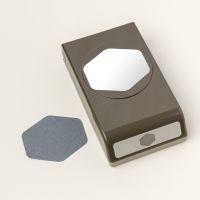 $23.00 | 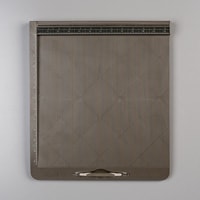 $37.00 | ||
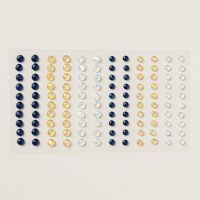 $8.50 |  $6.50 |  $6.00 |  $4.25 |




Comments
Post a Comment